How to talk to your teen about self-worth
No lectures, no eye-rolls (well, fewer). Simple, real-world ways to help your teen believe they are enough.
You've probably tried. "You're amazing, you know that?" And you got the eye-roll, the "Muuum," and a closed bedroom door.
It's not that they don't want to hear it. It's that a big, general compliment from a parent is very easy to dismiss. The good news: there are better ways in.
1. Go sideways, not face to face
The best conversations with teens rarely happen across a kitchen table. They happen in the car, on a dog walk, while you're both cooking. Side by side feels less like an interrogation. Keep it short and let silences sit.
2. Praise the effort and the person, not just the result
"You got an A" teaches them their worth comes with a grade attached. Try "I saw how much you stuck with that" or "I loved how you looked out for your friend today." Specific beats sweeping, every time.
3. Don't argue with the put-down. Get curious about it
When they say "I'm so stupid," the instinct is "No you're not!" It rarely lands. Try "That sounds like a rough day. What happened?" You'll learn what's actually driving it: the test, the group chat, the comparison.
4. Name the pressure out loud
Exams. Rankings. Social media. Friendship groups that shift every week. Teens often feel they're the only one struggling. Simply saying "A lot of people your age feel like this" takes some of the weight off.
5. Model it yourself
If they hear you calling yourself useless for burning dinner, they learn that's how we talk to ourselves. Let them hear you be kind to yourself about a mistake. It's one of the most powerful lessons you'll never have to say.
6. Give them the words when they can't find their own
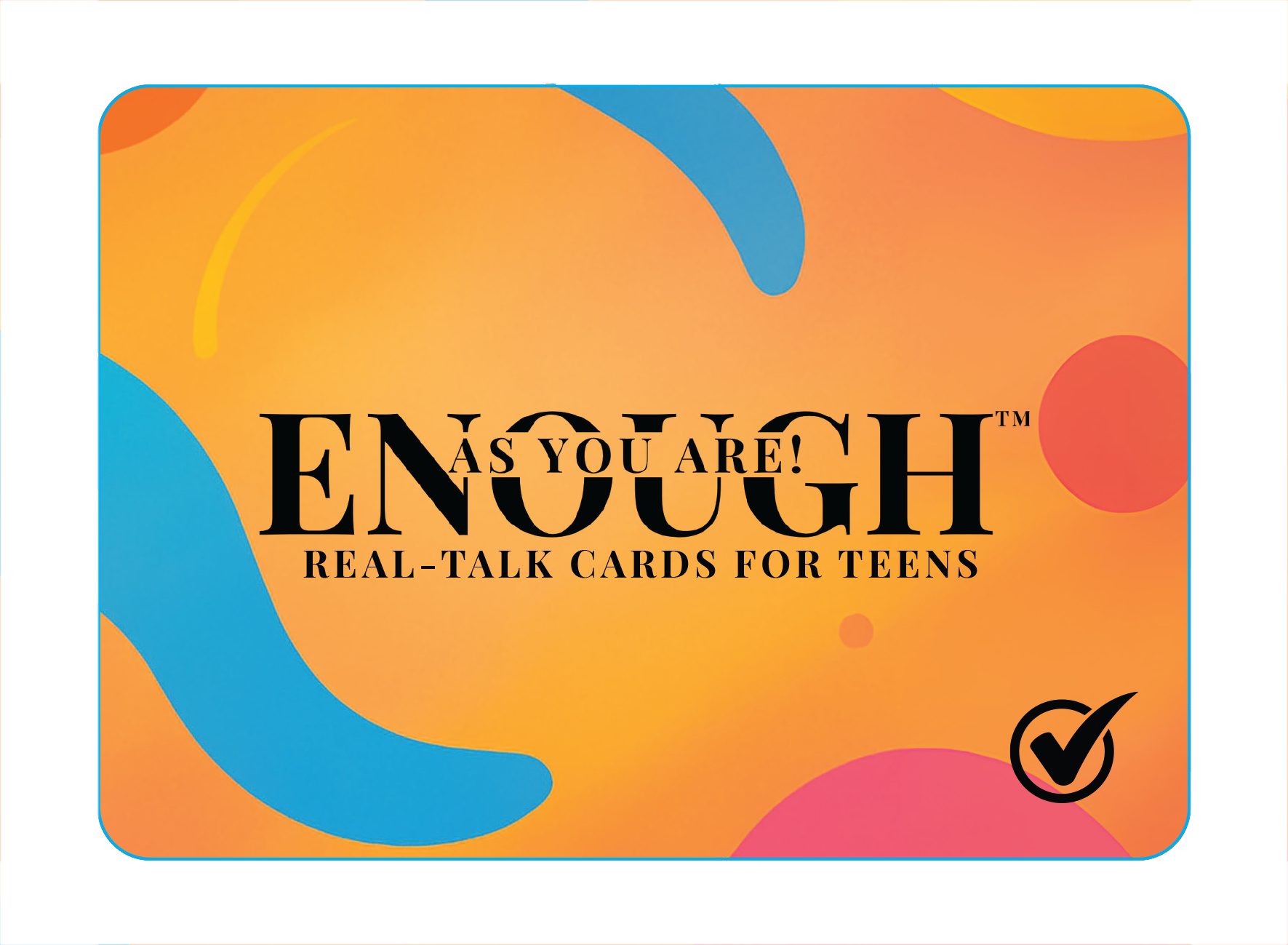
Sometimes a teen can't (or won't) say how they feel. A prompt helps. That's exactly why Marco wrote the ENOUGH AS YOU ARE!™ deck at 12: 52 real-talk cards, written by a teen for teens, on exam pressure, friendships, body image, social media and self-worth. Leave one on their desk. Pick one together at breakfast. Or just let them find it.
When to get extra support
If low mood, withdrawal or self-criticism lasts for weeks, or you're worried about their safety, talk to your GP or their school. YoungMinds also has free advice for parents on its website (we donate 5% of every sale to YoungMinds via Work for Good).
